
At Industrial3D, we help businesses across Houston and beyond navigate one of the most important visual communication decisions they face — choosing between 3D animation, virtual reality, and augmented reality for their marketing, training, and operational needs. Each technology serves distinct purposes, delivers different audience experiences, and carries unique production requirements. Understanding the key differences between these three powerful tools is the first step toward investing in the right solution for your specific business goals.
What Are 3D Animation, Virtual Reality, and Augmented Reality — A Clear Business Definition
Before comparing these three technologies, it is important to understand what each one actually is and how it functions as a business communication tool. At Industrial3D, we work with all three every day — producing technically precise 3D animation videos, developing fully immersive VR applications, and building AR solutions that layer digital content onto the physical world. Each technology has a distinct definition, a distinct delivery mechanism, and a distinct set of strengths that make it more or less suited to specific business communication challenges across different industries and audience types.
Understanding these definitions in a business context — rather than a purely technical one — is what allows Houston companies in oil and gas, manufacturing, engineering, energy, and beyond to make informed decisions about which visual technology will deliver the greatest impact for their specific use case. Our team at Industrial3D works as a true strategic partner for every client, helping them understand not just what each technology is, but how it translates into real business value across marketing, training, product demonstration, and corporate communication in the industries and markets they serve.
Defining 3D Animation and Its Role in Business Communication
3D animation is a pre-rendered visual medium in which three-dimensional models, environments, and characters are animated to tell a story, explain a process, or demonstrate a product. It is viewed on standard screens — websites, presentations, trade show displays, and video platforms — making it the most universally accessible and broadly applicable visual technology available to businesses of any size or sector.
What Virtual Reality and Augmented Reality Mean for Industrial Companies
Virtual reality creates a fully immersive digital environment that users experience through a VR headset, completely replacing their physical surroundings with an interactive 3D world. Augmented reality overlays digital content — 3D models, data, animations — onto the real world through a screen or AR device. Both technologies deliver interactive, experiential engagement that standard animation video cannot replicate, making them powerful tools for training and product demonstration applications.
How 3D Animation, VR, and AR Work Differently as Visual Communication Tools
The fundamental operational difference between 3D animation, VR, and AR lies in the level of interactivity and immersion each technology delivers to its audience. Standard 3D animation is a passive viewing experience — the audience watches a pre-rendered sequence of visuals that the production team has crafted to communicate a specific message. This makes 3D animation ideal for controlled storytelling, marketing content, product demonstrations, and explainer videos where the narrative needs to follow a precise, structured path that the creator defines from start to finish.
VR and AR, by contrast, are interactive technologies that place the user inside or alongside the digital content rather than positioning them as an outside observer. In a VR environment, users can move through a virtual facility, operate virtual equipment, and experience simulated scenarios in a way that creates genuine muscle memory and situational awareness — outcomes that passive video simply cannot produce. AR enhances real-world tasks by overlaying relevant digital information directly onto physical environments, giving field technicians, operators, and sales professionals access to interactive product data, assembly instructions, and visualization tools without ever leaving their physical workspace. At Industrial3D, we design and develop all three technologies with a clear understanding of these operational differences and how they translate into specific business communication advantages for our clients.
When to Choose 3D Animation Over VR and AR for Your Business Goals
3D animation is the right choice when your primary goal is clear, controlled visual storytelling that reaches the broadest possible audience across multiple platforms and formats simultaneously. If your Houston business needs to explain a complex industrial process, demonstrate a new product to potential buyers, train employees on safety procedures through video, or create compelling trade show and marketing content, professionally produced 3D animation delivers the most direct, cost-effective, and universally accessible path to those outcomes without the hardware requirements and interactive development complexity of VR and AR solutions.
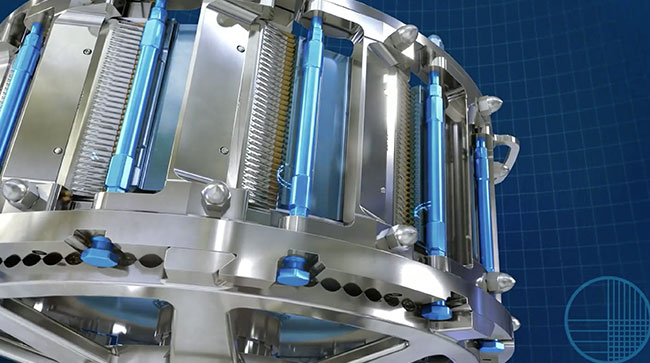
3D animation also offers significant advantages when technical accuracy and narrative precision are the top priorities. At Industrial3D, our CAD-based animation production process ensures that every product, system, and process we animate is represented with engineering-level accuracy — making our 3D animation services the preferred choice for Houston clients in oil and gas, manufacturing, engineering, and aerospace who need their visual content to hold up to technical scrutiny from demanding expert audiences. When your goal is to produce high-quality visual content that can be deployed immediately across websites, presentations, trade shows, social media, and digital marketing without requiring any special hardware or software from your audience, 3D animation from Industrial3D is the most powerful and practical solution available.
When VR and AR Deliver Greater Business Value Than Traditional 3D Animation
There are specific business scenarios where VR and AR deliver measurably greater value than traditional 3D animation, and understanding these scenarios is critical for Houston businesses making technology investment decisions. VR delivers its greatest advantage when the goal is experiential learning — situations where the user needs to do something rather than simply watch something. Industrial training, safety simulation, equipment operation practice, and emergency response preparation are all use cases where VR’s immersive, interactive nature produces training outcomes that passive animation video cannot match regardless of production quality or creative execution.
AR delivers its highest value in real-world operational contexts — when digital information needs to be accessed in a physical environment rather than on a separate screen. Product demonstrations, field service support, assembly guidance, and interactive trade show experiences all benefit tremendously from AR’s ability to bridge the physical and digital worlds in real time. At Industrial3D, we develop VR and AR applications specifically designed for the operational demands of Houston’s industrial sectors, building immersive solutions that reduce training costs, improve workforce readiness, enhance sales effectiveness, and deliver a level of audience engagement that no traditional animation video — however expertly produced — can replicate in the environments and scenarios where interactivity is the defining factor in communication success.
VR Applications for Industrial Training and Safety Simulations
Our VR applications for Houston’s industrial sectors focus primarily on training and safety simulation — areas where immersive, hands-on learning produces dramatically better outcomes than classroom or video-based instruction. We develop VR training programs that allow employees to practice equipment operation, emergency response, and hazardous procedure management in fully safe virtual environments, building competency and confidence without any of the risk or cost associated with live training scenarios on actual industrial sites.
AR Solutions for Product Demonstrations and Field Operations
Our AR solutions bring digital product models, operational data, and interactive information directly into the physical environments where Houston clients need them most. For sales teams, AR enables interactive product demonstrations that overlay 3D models onto real-world surfaces — giving prospects an engaging, memorable experience that static materials cannot match. For field operations teams, AR delivers contextual technical guidance and visual overlays that improve accuracy, reduce errors, and enhance operational efficiency in real time.
Key Industry Use Cases — 3D Animation vs VR vs AR for Houston Businesses
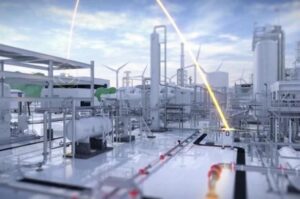
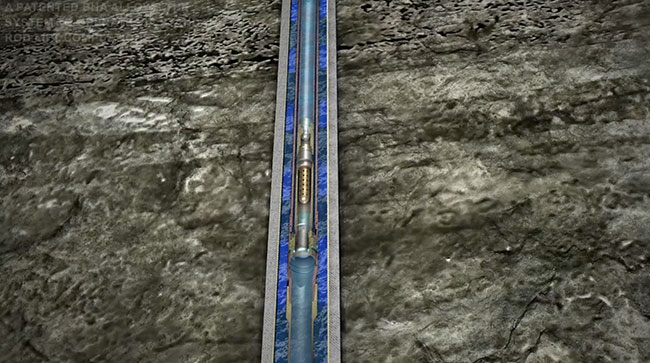
The choice between 3D animation, VR, and AR for Houston businesses is most clearly understood through specific industry use cases that illustrate how each technology performs in real-world applications. In the oil and gas sector, 3D animation excels at explaining drilling processes, pipeline systems, and downhole tool operations to investors, regulators, and customers — while VR delivers its greatest value in safety training simulations where workers practice emergency response procedures for well control events, equipment failures, and offshore evacuation scenarios before ever encountering them in the field.
In manufacturing, 3D animation is the preferred tool for product launches, trade show demonstrations, and marketing content that showcases mechanical systems and assembly processes. AR, however, delivers superior value on the manufacturing floor itself — where technicians can access interactive assembly guides, component identification overlays, and quality control checklists through AR-enabled devices without interrupting their physical workflow. For engineering and aerospace clients, 3D animation supports bid presentations, design reviews, and technical explanations, while VR enables immersive design walkthroughs that allow stakeholders to experience a facility, vehicle, or system at full scale before a single physical component is manufactured. At Industrial3D, we help Houston businesses across all of these sectors identify which technology — or which combination of technologies — will deliver the strongest return on their visual communication investment.
How Industrial3D Delivers 3D Animation, VR, and AR Under One Roof in Houston
One of Industrial3D’s most significant competitive advantages in the Houston market is our ability to deliver 3D animation, VR applications, and AR solutions through a single integrated team — eliminating the coordination challenges, consistency issues, and cost inefficiencies that arise when businesses work with multiple separate vendors for different visual technology needs. Our team of animators, CAD specialists, VR developers, AR designers, and creative strategists collaborates seamlessly across every project, ensuring that all visual content we produce maintains consistent technical accuracy, brand alignment, and production quality regardless of the delivery format or interactive technology involved.
This integrated capability is particularly valuable for Houston clients whose projects span multiple visual technology types — for example, a product launch campaign that requires a 3D animation video for marketing, an AR demonstration tool for the sales team, and a VR training application for the installation and service workforce. At Industrial3D, we manage all three components under a single production relationship, with a unified understanding of the product, the audience, and the business objectives driving each deliverable. With four locations, over 25 years of industrial expertise, and a nationally recognized portfolio spanning 3D animation, VR, and AR projects, we are the only Houston studio equipped to serve as a truly comprehensive visual technology partner for businesses operating across the full spectrum of industrial and corporate communication needs.
Cost and Production Considerations — Comparing 3D Animation, VR, and AR Investments
The investment required for 3D animation, VR, and AR projects varies significantly based on the technology involved, the complexity of the content, and the intended deployment platform. Understanding these cost and production differences upfront helps Houston businesses plan their visual technology budgets more accurately and choose the right solution for their goals without over-investing in capabilities their specific use case does not require or under-investing in a technology that fails to deliver the audience impact their situation demands.
Understanding the Production Cost Differences Between Each Technology
Traditional 3D animation is generally the most accessible entry point from a production cost perspective — it requires sophisticated software and artistic expertise, but does not demand the interactive development infrastructure, hardware compatibility testing, and user experience design work that VR and AR projects require. VR and AR applications carry higher development costs that reflect the complexity of building interactive, real-time environments rather than pre-rendered video sequences, and the need to optimize performance across specific hardware platforms and deployment environments used by the end-user audience.
Maximizing ROI by Choosing the Right Visual Technology for Your Project
The highest return on investment comes from matching the right technology to the right use case rather than simply choosing the most impressive or most affordable option available. A beautifully produced 3D animation video delivers exceptional ROI for marketing and product demonstration — while a VR training application delivers far greater ROI in high-risk industrial training scenarios where the cost of a single preventable incident exceeds the total development investment. At Industrial3D, we help Houston clients make this determination through a strategic consultation process that evaluates goals, audience, and budget together.
How to Decide Which Technology Is Right for Your Houston Business
Deciding between 3D animation, VR, and AR for your Houston business comes down to answering three fundamental questions: Who is your audience, what do you need them to do, and where will they consume your content? If your audience watches content on screens across multiple locations and you need them to understand a product or process, 3D animation is your most versatile and cost-effective solution. If your audience needs to practice a skill, simulate a scenario, or experience an environment interactively, VR delivers outcomes that no passive video format can replicate.
If your audience needs digital information delivered directly into a physical workspace or sales environment, AR creates the contextual, real-world integration that neither animation nor VR can achieve in those specific settings. At Industrial3D, we walk every Houston client through this decision-making framework during our free initial consultation — helping you identify the technology, or the combination of technologies, that will deliver the greatest value for your specific business goals, audience profile, and budget. Our goal is never to sell you the most expensive solution — it is to recommend the right solution that produces the strongest business outcomes for your Houston company across every use case and communication objective you bring to our team.
Frequently Asked Questions About 3D Animation, VR, and AR for Business
What is the main difference between 3D animation and virtual reality for businesses?
3D animation is a pre-rendered passive video viewed on standard screens — ideal for marketing, product demonstration, and training videos. Virtual reality is an interactive immersive experience delivered through a headset, best suited for hands-on training simulations and experiential learning scenarios that require user participation rather than passive viewing to achieve the desired outcome.
Which is better for industrial training — 3D animation or VR simulation?
Both have value, but they serve different training goals. 3D animation excels at explaining processes and procedures clearly across large workforces via video. VR simulation delivers superior outcomes for hands-on skills training, emergency response practice, and equipment operation — where interactive experience and muscle memory development are essential components of effective workforce preparation.
Can Industrial3D combine 3D animation with VR and AR in a single project?
Yes. We regularly develop integrated projects that combine 3D animation video for marketing and broad communication, VR applications for immersive training, and AR tools for sales demonstrations or field operations — all produced by our unified team with consistent technical accuracy, brand alignment, and visual quality across every deliverable format included in the project.
How does augmented reality differ from virtual reality for product demonstrations?
Virtual reality replaces the physical environment entirely with a digital world experienced through a headset. Augmented reality overlays digital 3D models and information onto the real physical environment through a screen or AR device. For product demonstrations, AR allows prospects to visualize products in their actual physical space — making it particularly powerful for sales environments and interactive trade show experiences.
Which visual technology delivers the best ROI for Houston industrial companies?
It depends entirely on the use case. 3D animation delivers the strongest ROI for marketing, trade shows, and broad-audience communication. VR delivers superior ROI for high-stakes industrial training where incident prevention justifies the development investment. AR delivers strong ROI in field operations and sales demonstration contexts. Industrial3D helps Houston clients identify the right technology for their specific goals.
Partner with Industrial3D for 3D Animation, VR, and AR Solutions Tailored to Your Business
At Industrial3D, we are uniquely positioned to help Houston businesses harness the full power of 3D animation, virtual reality, and augmented reality through a single experienced, technically specialized production partner. Whether you need a compelling product animation, an immersive VR training program, or a cutting-edge AR demonstration tool, our team brings the industrial expertise, creative excellence, and strategic guidance your project deserves. Contact us today for a free consultation and let us help you choose the right visual technology for your business.